
Skip to Content

Creative Reconstruction Summit” Marks 30 Years Since Devastating Kobe Quake, Looks Ahead with Vision
September 28, 2025 by
Creative Reconstruction Summit” Marks 30 Years Since Devastating Kobe Quake, Looks Ahead with Vision
Awam Nama, Awam Nama


Creative Reconstruction Summit” Marks 30 Years Since Devastating Kobe Quake, Looks Ahead with Vision  


Introduction

On the 30th anniversary of the great Hanshin–Awaji (Kobe) earthquake, Hyōgo Prefecture hosted a high-profile gathering called the Creative Reconstruction Summit. The event, held in Kobe, brought together governors from Japan’s disaster-prone regions, local leaders, scholars, and activists to reaffirm the principles of rebuilding not merely to what was before—but better than before. This summit adopted the Hyogo Declaration, signaling a collective commitment to preserving disaster memory and fostering resilient, vibrant communities through innovation and collaboration. 

By revisiting the scars of the past and discussing strategies for the future, the summit emphasized how disaster-impacted regions across Japan—from northeastern Tōhoku to southwestern Kumamoto—can learn and evolve together. 

The Great Kobe Quake: Memory, Trauma, and Transformation

To understand the urgency and weight of this summit, one must first recall what happened 30 years ago. On January 17, 1995, at 5:46 a.m. local time, a massive earthquake measuring magnitude 7.3 struck the southern part of Hyōgo Prefecture, including the city of Kobe — what is known as the Great Hanshin–Awaji earthquake. 

The human and economic toll was staggering: more than 6,000 lives lost, tens of thousands injured, and hundreds of thousands displaced. Entire neighborhoods were destroyed, critical infrastructure collapsed, and fires flared when city utilities fractured. 

But out of that devastation emerged something extraordinary: a nationwide awakening in disaster preparedness, building standards, and community resilience. Over the decades, Kobe and the Hyōgo region have become symbols of cautious optimism—of how a city can rebuild itself while preserving memory and fostering innovation.

Genesis of the Summit & Its Goals

This year’s summit was convened under the banner of “creative reconstruction”—a concept that moves beyond restoration and aims to transform disaster-struck areas into stronger, more adaptive societies. 

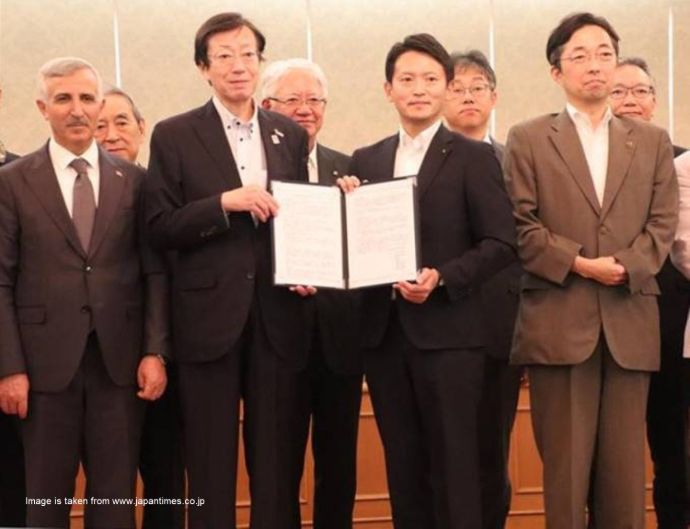
The Hyōgo Prefectural Government took the lead, hosting regional governors and mayors from zones that have faced major natural disasters. Key participants included Governor Motohiko Saito of Hyōgo, Governor Hiroshi Hase of Ishikawa (which recently endured a 2024 earthquake), Governor Takashi Kimura of Kumamoto (hit by quakes in 2016), and Kobe Mayor Kizō Hisamoto. 

Over the course of the summit, participants adopted the Hyogo Declaration, intending to enshrine a shared mission: to pass down lessons from past catastrophes and to inspire future generations to rebuild more wisely. The declaration also underscores the role of local identity—encouraging communities to harness their unique cultural and geographic strengths in reconstruction. 

Key Themes & Discussions
1. Community Bonds & Social Fabric

A central tenet in the Hyogo Declaration was that maintaining the social bonds within communities is as vital as restoring physical infrastructure. Leaders emphasized that disasters often cause social isolation, mental stress, and breakdowns in neighborly support—factors that slow recovery and scar residents emotionally. 

In disaster-prone zones, the summons was clear: reconstruction must include space for gathering, cultural life, and local participation, not just roads and buildings.

2. Transmitting Memory to Future Generations

One of the summit’s most poignant aims is preserving the memory of loss—not for grief’s sake, but to guard against complacency. Participants spoke of integrating disaster stories into school curricula, local museums, and public art, so younger generations—those born well after 1995—remain connected to the region’s past and future. 

3. Disaster Sharing Across Regions

Kobe’s summit was not merely retrospective. It also spotlighted how lessons from the 1995 quake inform responses to Japan’s more recent disasters:

i) The 2011 Tōhoku earthquake and tsunami that ravaged northeastern Japan
ii) The 2016 Kumamoto earthquakes in southern Japan
iii) The 2024 Noto Peninsula quake in Ishikawa Prefecture, which sparked warnings about victim isolation in rural areas 

Voices like Ishikawa Governor Hase stressed the urgency of investing in community connectivity so that disaster victims do not become socially cut off. 

4. Local Identity, Innovation & Sustainability

The summit pushed for what might be called “bottom-up resilience.” Instead of applying a one-size-fits-all blueprint, disaster-hit areas are urged to leverage their local culture, resources, and geographic traits. This could mean eco-engineering, renewable energy, landscape architecture, or climate-resilient agriculture—all rooted in place. 

Successes & Challenges Since Kobe 1995
Reconstructive Achievements

Over three decades, Kobe has largely reinvented itself. Building codes were overhauled, early warning and seismic monitoring systems were improved, disaster drills became commonplace, and urban planning prioritized both safety and livability.

One symbolic feature: the fields of sunflowers planted in vacant lots where homes once stood. These flowers became a living memorial and an optimistic sign of rebirth. Over time, this imagery spread across Japan as a symbol of resilience. 

Architects, urban designers, and city planners globally now cite Kobe as a model of how recovery can hybridize healing and innovation.

Ongoing and Emerging Challenges

Yet progress has not been uniform, nor complete. Some critical challenges remain:

i) Aging population & rural decline: Many quake-affected areas have seen demographics shift as young people leave for cities. Maintaining community cohesion in aging towns is becoming harder.
ii) Climate change amplification: With rising risks of floods, landslides, and extreme weather, reconstruction must now factor in added environmental uncertainty.
iii) Resource limits and trade-offs: Budgets are finite. Balancing investments in disaster readiness, social welfare, and economic revitalization is a tense tightrope.
iv) Memory fade & apathy: As time distances new generations from the trauma of 1995, there's a danger of complacency or dismissal of risk. 

Voices From the Summit
Hyōgo Governor Motohiko Saito emphasized that “supporting the maintenance of communities is most important,” highlighting that reconstruction isn’t just about structures—it's about people, relationships, and the life between walls. 
Meanwhile, Ishikawa’s Governor Hiroshi Hase drew on his prefecture’s own recent earthquake experience, underlining the importance of measures to prevent victims’ social isolation—a reminder that disaster recovery must be holistic. 
Other leaders – such as Kumamoto Governor Takashi Kimura and Kobe Mayor Kizō Hisamoto – used the platform to exchange ideas and reaffirm commitments to making disaster resilience a living legacy, not just a memory. 

Looking Ahead: What Must Be Done

Based on the summit’s discourse and Japan’s evolving risks, here’s a look at priority actions and strategies that should shape future reconstruction:
i) Strengthen Local Resilience Networks
Towns and villages should nurture local disaster response teams, volunteer networks, and social support systems, especially in remote or depopulating areas.
ii) Institutionalize Memory
Embed disaster history into education, public spaces, and architecture, so future citizens don’t forget lessons learned.
iii) Adaptive Engineering & Green Design
Use nature-based solutions (green buffers, slope stabilization, permeable surfaces) integrated with modern construction techniques to absorb shocks.
iv) Cross-Region Collaboration
Prefectures should share data, best practices, and technical support—especially from regions with divergent challenges (coastal, mountainous, rural).
v) Participatory Planning
Residents must be co-creators in reconstruction plans. Their local insights, needs, and cultural ties must guide design.
vi) Sustainable Funding & Innovation
Secure long-term financial instruments and tap private-sector partnerships, technology, and research to build cost-effective, resilient systems.
vii) Monitoring & Evaluation
Systematically assess the impact of reconstruction policies—both physical and social—and refine strategies based on data and feedback loops.

Why This Matters: Beyond Japan
While the summit centers on Kobe and Japan, the lessons resonate globally. Earthquakes, tsunamis, cyclones, floods, and other natural disasters are no longer rare events. Cities and regions around the world must grapple with how to rebuild smarter, not just rebuild faster.

The idea of “creative reconstruction” is applicable to many contexts: transforming post-conflict zones, recovering from pandemics, or adapting to climate change. The summit’s ambition is that damaged regions should not simply “return”—they should grow, improve, and become more just, inclusive, and resilient than before.

Reflections & Critiques
No summit is perfect, and several caveats deserve attention:
i) From banner to implementation: Declarations and pledges are meaningful only if translated into policies, budgets, and action on the ground.
ii) Inequality risks: Reconstruction can inadvertently favor affluent areas, sidelining poorer neighborhoods that may need support most.
iii) Cultural erasure danger: In the quest to modernize, some heritage, traditional forms, and local character may be lost.
iv) Generational gaps: Younger residents may feel disconnected from trauma-based memorials or narratives, requiring inclusive storytelling.

Yet despite these challenges, the summit represents a vital step—not just in remembrance, but in renewal.

Conclusion
The Creative Reconstruction Summit in Kobe at the 30-year mark is more than a commemorative event. It is a call to action, a reaffirmation that societies should not only recover but reimagine. Through the Hyogo Declaration, regional leaders have expressed their resolve to pass the torch of memory and innovation to future generations.
As Japan continues to face seismic, climate, and demographic pressures, orientations first forged in Kobe are ever more relevant. The true measure of this summit will lie in how regions take its principles off the page—into schools, city plans, community life, and resilient futures.
Kobe’s rebirth offers a beacon: that from destruction and loss, a new society can emerge—stronger, more compassionate, and ready to withstand the uncertainties ahead.
Creative Reconstruction Summit” Marks 30 Years Since Devastating Kobe Quake, Looks Ahead with Vision
Awam Nama, Awam Nama September 28, 2025
Share this post
Archive